Planning a corporate event without a clear budget framework is like booking a venue before you know your headcount. Production costs vary dramatically depending on event scope, technical complexity, and the quality of execution your brand demands. This guide breaks down every factor that drives corporate event production costs, provides realistic pricing ranges, and gives you the planning framework to build a defensible budget before you engage vendors.
Whether you’re organizing a 100-person pharmaceutical advisory board or a 2,000-person annual conference, the same core variables determine what you’ll spend — and knowing them in advance puts you in control of the conversation.
Section 1: Average Corporate Event Production Cost
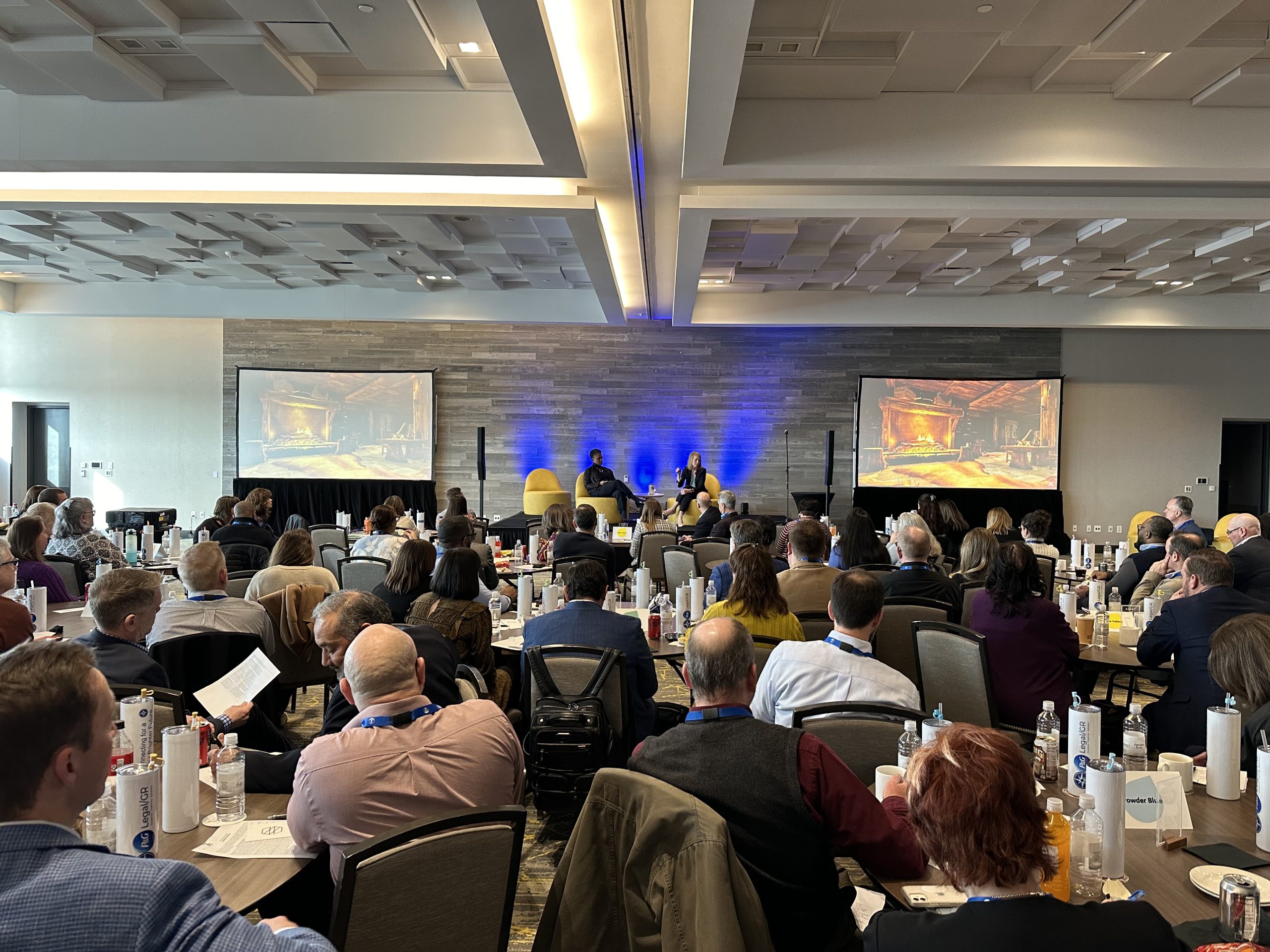
The figures below reflect all-in AV production — equipment, crew, and show management. They exclude venue rental, catering, travel, and décor.
| Event Type | Typical AV Production Budget |
|---|---|
| Small corporate meeting (50–100 attendees) | $5,000 – $15,000 |
| Mid-size conference (100–300 attendees) | $20,000 – $75,000 |
| Large conference production (500+ attendees) | $75,000 – $250,000+ |
| Hybrid conference (any size) | $40,000 – $150,000+ |
| Pharmaceutical advisory board / medical meeting | $20,000 – $60,000 |
| Product launch or brand activation | $40,000 – $150,000 |
Pricing varies based on audience size, venue, union labor market, and technical scope. These ranges reflect CitiView AV’s direct market experience across New York, New Jersey, and national events.
Section 2: What Drives Event Production Cost
Whether you’re producing a 150-person sales kickoff or a 2,000-person annual conference, the same core variables determine your production budget. Understanding these factors before you engage vendors will prevent budget surprises and help you negotiate more effectively.
Audience Size
Larger rooms require longer line-array speaker systems, more display surfaces, additional wireless channels, and more crew positions. Scaling from 300 to 600 attendees rarely doubles your cost — but it adds 30–50% to most line items.
Venue Type and Union Labor
Hotel ballrooms and convention centers in major markets — New York, Chicago, Las Vegas, San Francisco — often require union labor for specific technical tasks. This can add 20–40% to crew costs compared to non-union venues. Always clarify union requirements before finalizing your venue contract.
Stage Design and Scenic
Custom staging, risers, backdrops, and scenic elements add both visual impact and cost. A basic platform-and-pipe-and-drape setup runs $2,000–$8,000. A fully custom set design with branded elements, curved surfaces, and integrated LED panels can reach $50,000+.
LED Video Walls vs. Projection
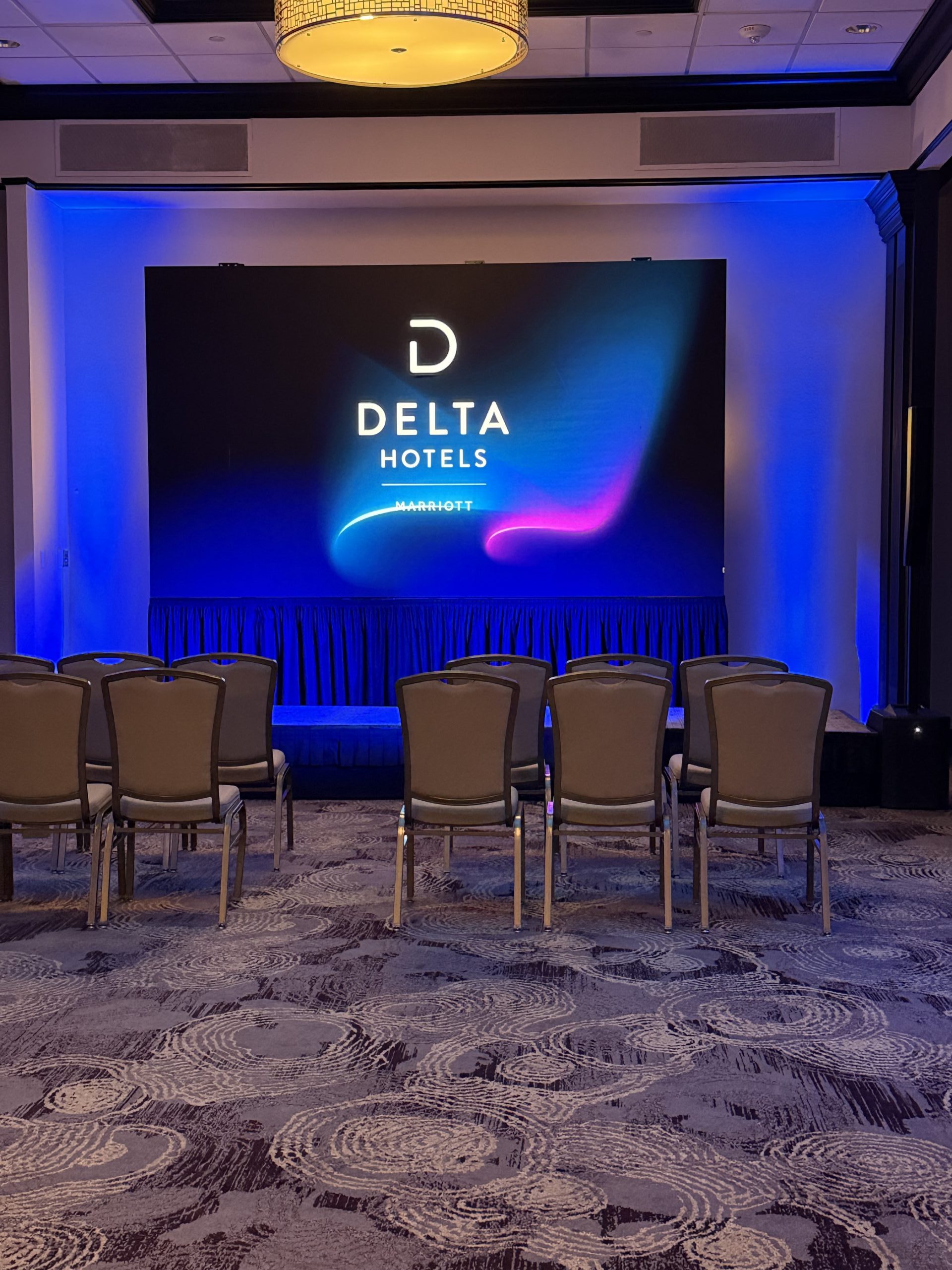
LED video walls deliver brighter, sharper images in lit ballrooms but carry higher upfront costs — typically $8,000 to $50,000 depending on pixel pitch, size, and configuration. Projection is cost-effective for dark environments and large throw distances. Choosing the wrong display technology for your venue adds both cost and compromise. Learn more about LED video wall options.
Lighting Systems
Stage wash, intelligent moving fixtures, audience blinders, and architectural uplighting transform a hotel ballroom into a branded environment. A basic lighting package runs $3,000–$8,000. A fully programmed show with moving lights runs $12,000–$40,000.
Number of Breakout Rooms
Each breakout room adds projection or display systems, audio systems, wireless microphones, and crew. Five breakout rooms with identical AV configurations can add $15,000–$40,000 to a conference budget. Standardizing formats across rooms is one of the most effective cost controls available. Learn about breakout room AV production.
Livestream and Hybrid Production
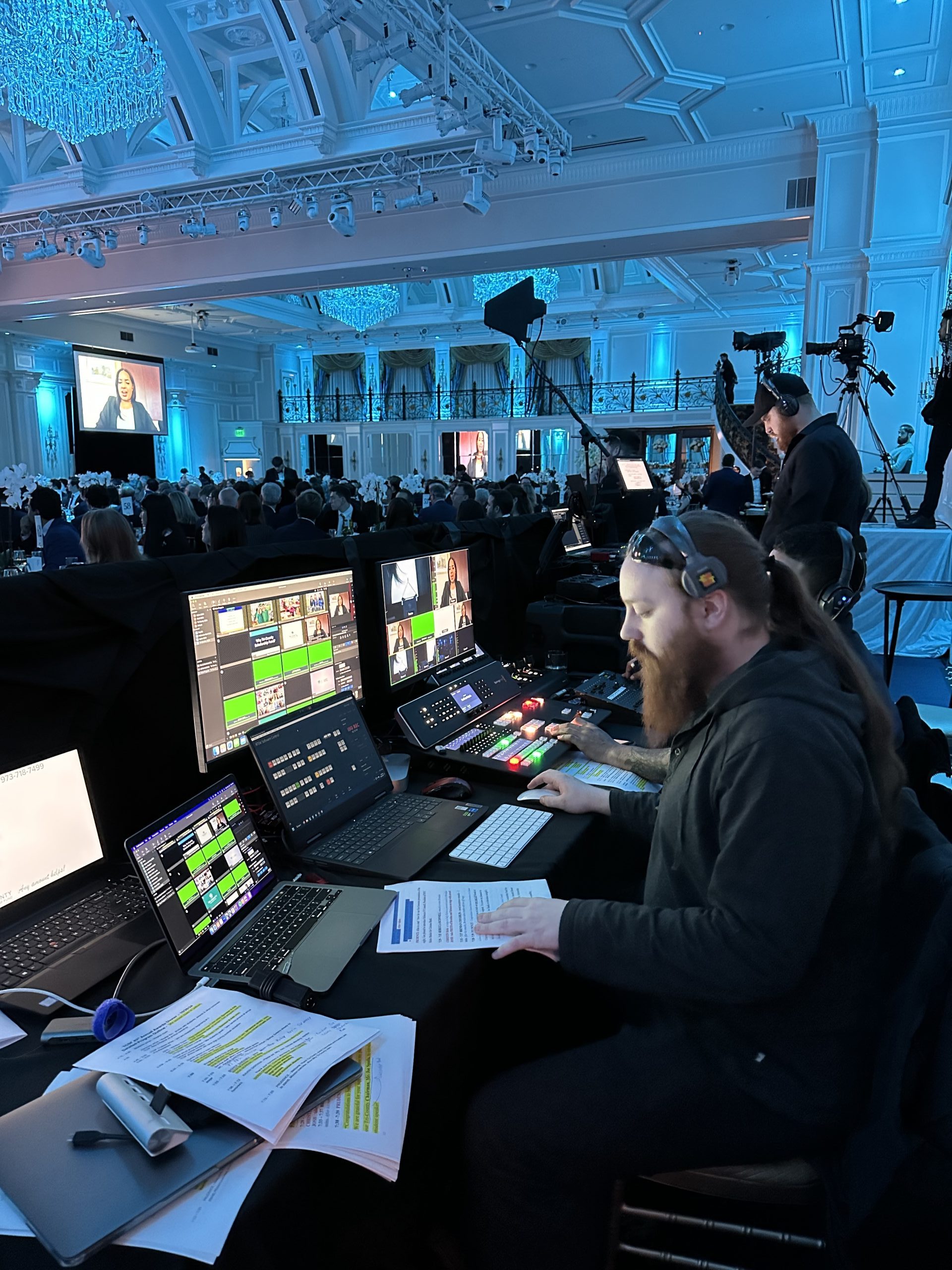
Professional livestreaming adds multi-camera production, encoding hardware, broadcast crew, and content delivery infrastructure. A hybrid general session at a major conference adds $15,000–$40,000 to the base production budget. Pharmaceutical meetings with interactive polling, interpretation, or specialized recording requirements add further complexity. Learn about hybrid event production.
Technical Crew
Equipment doesn’t run itself. A full-day corporate event requires audio engineers, video engineers, lighting programmers, riggers, stagehands, and a production director. Labor rates vary by market — New York City and San Francisco command premium rates. Plan for at least $5,000–$15,000 in skilled crew for a mid-size conference. Multi-day events and complex setups multiply this significantly.
Production costs typically represent 15–25% of a total event budget depending on complexity. Planning with this benchmark in mind helps prevent scope surprises.
Section 3: Typical AV Production Budget Breakdown
Understanding how production dollars are distributed helps planners evaluate quotes, identify where flexibility exists, and prioritize spending based on what their audience will actually notice.
| Budget Category | Typical % of Budget | What It Covers |
|---|---|---|
| Audio Systems | 18–25% | Line arrays, subwoofers, wireless mics, IEM systems, mixing console |
| Video Systems | 28–35% | LED walls, projectors, IMAG cameras, screens, switchers, media servers |
| Lighting | 12–18% | Stage wash, moving fixtures, uplighting, lighting console, power distribution |
| Staging & Scenic | 8–15% | Risers, platforms, pipe and drape, backdrops, custom scenic elements |
| Crew & Labor | 22–30% | Audio engineer, LD, video engineer, riggers, stagehands, production manager |
| Streaming & Hybrid | 10–20% | Encoding hardware, multi-camera setup, CDN delivery, broadcast crew |
Video systems consistently represent the largest single cost category — which is why LED wall vs. projection decisions have such significant budget implications. Audio quality should be the last place to cut; poor sound is the most complained-about production failure at corporate events.
Section 4: Example Cost Scenarios
These scenarios reflect realistic all-in production budgets based on CitiView AV’s experience producing corporate events in the Northeast and nationally. They include equipment, crew, freight, and show management.
500-Person Annual Conference — $90,000–$150,000
A single-day general session at a major hotel ballroom for 500 attendees typically includes an LED video wall (16’x9′ or larger), line-array audio, a full lighting package with moving fixtures, two-camera IMAG, and a six- to eight-person production crew. Multi-day events with load-in, rehearsal, show, and strike add 30–40% in additional labor. Union labor venues add a further 15–25%.
Hybrid Leadership Summit (200 Attendees + Remote Viewers) — $65,000–$110,000
A hybrid leadership summit combines on-site AV production with professional livestreaming for distributed audiences. This requires multi-camera direction, encoding hardware, a dedicated streaming engineer, CDN delivery, and an interactive virtual platform. On-site production for 200 attendees might run $45,000–$70,000. Adding professional hybrid production adds $15,000–$40,000 depending on stream quality and interactivity requirements.
Executive Meeting / Pharmaceutical Advisory Board (50–80 Attendees) — $18,000–$45,000
Smaller-format executive events have different demands — not scale, but precision. A pharmaceutical advisory board typically requires boardroom-quality AV, recording capabilities, interactive polling, possibly multi-language interpretation, and spotless technical execution. These events may be smaller in headcount but should never be treated as low-complexity. Plan accordingly.
Multi-City Roadshow — Pricing Per Market + Logistics
Roadshow events require production consistency across multiple markets, often with varying venue constraints, union jurisdictions, and logistics overhead. Standardizing your technical specification across all markets — and working with one production partner for the full run — is the most reliable way to control cost and quality simultaneously.
Section 5: How to Budget for Corporate Event Production
The most common budgeting mistake is treating AV production as a line item to trim after other expenses are locked in. Production quality is what your attendees will actually experience — and remember. Here’s how experienced planners approach production budgeting.
Start With a Benchmark
Production costs typically represent 15–25% of a total event budget. If your total event budget is $500,000, expect $75,000–$125,000 in production costs for a full-scale conference. Use this to set realistic expectations early — before venue contracts are signed and speaker commitments are made.
Get an Itemized Quote
A complete production quote should include: equipment inventory and rental rates, labor by crew category and day, freight and trucking, advance and pre-production hours, show management and on-site supervision, and any subcontracted services such as rigging or power distribution. Be cautious of quotes that bundle everything into a single line item — you need transparency to evaluate scope changes as your event evolves.
Plan for Load-In, Rehearsal, and Strike Days
Union labor requirements, rigging restrictions, freight elevators, and loading dock access all affect your costs. A hotel ballroom with union rules and a limited load-in window can double your labor budget compared to a purpose-built convention space. Always factor all production days — not just the show day — into your total budget.
Questions to Ask Before Signing
- Do you own the equipment or subrent it?
- Who are the specific crew members for this event?
- How do you handle technical failures mid-show?
- What is included in advance production and pre-production hours?
- Have you worked in this venue before?
The answers reveal more about a vendor’s capabilities than their portfolio does.
Section 6: Ways to Reduce Event Production Costs
The most effective way to reduce production costs is not cutting equipment — it’s making smarter decisions earlier. Here is where experienced planners save real money without sacrificing production quality.
- Commit to venue selection early. Your production partner can advise on which venues are more production-friendly before you sign. Negotiate room block minimums and confirm load-in schedules before contracting.
- Standardize your room formats. Running five identical breakout room configurations reduces equipment inventory and setup time significantly compared to five custom setups.
- Plan your hybrid strategy before your on-site design. Adding hybrid production capability as an afterthought is expensive. Integrating it from the design phase forward is not.
- Match display technology to your venue environment. Projection in dark environments, LED in lit ones — using the wrong technology means overspending for underperformance.
- Engage your production partner during venue negotiations. A good AV partner can review venue contracts, flag problematic union clauses, and identify load-in conflicts before you’re committed.
- Lock your program before production design. Every speaker addition, session change, and format adjustment mid-process costs money in re-engineering time and equipment changes.
Frequently Asked Questions
How much does AV typically cost for a corporate conference?
AV for a corporate conference typically ranges from $25,000 to $65,000 for 100 to 300 attendees in a single ballroom, covering equipment, crew, and show management. Larger multi-day events and those with hybrid components will fall in a higher range.
What is the biggest cost driver in corporate event production?
LED video walls, labor in union venues, and hybrid production infrastructure are typically the largest cost drivers. Equipment rental alone for a well-equipped general session can run $18,000 to $50,000 before crew costs.
Does hiring a full-service AV company save money?
Usually yes. Full-service production companies that own their equipment avoid subrentals and markups. They also provide show management that prevents costly on-site mistakes and scope creep that budget-only vendors can’t anticipate.
How far in advance should I get AV quotes?
For events over 200 attendees or those with complex technical requirements, get production quotes 6 to 12 months out. This secures equipment inventory and experienced crew before they are committed to other events.
Are union labor costs always higher?
Union venues in cities like New York, Chicago, and Las Vegas require union crew for certain tasks, which increases labor costs. However, experienced union crews are efficient and reliable. Plan for it in your budget rather than trying to avoid it.
What is typically included in a full-service AV production quote?
A comprehensive production quote should include an itemized equipment list with rental rates, labor by crew role and day, freight and trucking costs, pre-production and advance hours, show management, and any subcontracted services such as rigging or power distribution. Be wary of single-line-item quotes — transparency is a sign of a trustworthy partner.
Can I use the hotel’s in-house AV for my conference?
Hotel in-house AV is convenient but typically more expensive and less specialized than an independent production company for complex events. For a small meeting or simple presentation it may be sufficient. For conferences, product launches, or hybrid events, bringing an independent production partner almost always delivers better value and execution quality.
Related Event Production Services
CitiView AV provides full-service event production across every format. Explore our core services:
- Corporate Event Production — Full-scale production for conferences, summits, and annual meetings
- Conference AV Production — Audio, video, and lighting for single and multi-day conferences
- Hybrid Event Production — On-site AV combined with professional livestreaming for distributed audiences
- Breakout Room AV Services — Consistent, reliable AV across every concurrent session room
- LED Video Wall Rental — Custom LED configurations for general sessions and brand activations
Planning a Corporate Conference or Event?
Our production team helps corporate event planners estimate technical requirements, evaluate venues, and build realistic production budgets — before you sign anything.
CitiView AV has delivered flawless corporate event production since 1998.